
Artificial Intelligence (AI) is reshaping the urban planning landscape, providing city planners with powerful intelligence platforms to understand and respond to urban challenges. By analyzing vast amounts of data from various sources, AI-driven urban intelligence delivers insights that traditional methods cannot match, making urban planning more dynamic, evidence-based, and responsive.
Beyond Traditional Planning Methods
Traditional urban planning often relies on static data from censuses, surveys, and public consultations. While these methods provide valuable insights, they can be time-consuming and may not accurately reflect the current state of urban environments. AI-powered intelligence platforms change this by processing diverse data streams from social media sentiment, demographic patterns, community feedback, and public service usage.
This dynamic analytical approach helps planners make decisions based on comprehensive, up-to-date intelligence, leading to more effective and evidence-based urban planning.
Traffic and Mobility Analysis Revolution
A prime example of AI’s impact on urban planning is traffic and mobility analysis. Cities like Sydney use AI-driven intelligence platforms to analyze traffic patterns and congestion. These systems process data from various sources to provide planners with predictive insights about mobility needs, helping them make evidence-based decisions about transportation infrastructure and policy. The result is better-informed planning that leads to reduced congestion and improved resident quality of life.
Environmental Sustainability Intelligence
AI also plays a critical role in environmental sustainability planning. By analyzing environmental data, AI platforms can identify pollution patterns and predict air quality trends. This intelligence enables city planners to design evidence-based policies to reduce pollution, such as optimizing zoning decisions, planning green space locations, or designing sustainable transportation networks.
In cities like Amsterdam and Singapore, AI-powered intelligence platforms inform environmental policies, supporting sustainable urban growth and public health initiatives.
Public Safety Analytics and Emergency Planning
Moreover, AI-driven intelligence enhances public safety planning through disaster preparedness and emergency response analytics. Predictive models can identify high-risk areas for floods or other natural disasters, helping planners design resilient infrastructure and prepare evacuation plans. During the COVID-19 pandemic, AI platforms analyzed disease spread patterns and predicted hotspots, providing planners with intelligence to support resource allocation decisions and targeted public health interventions.
Enhanced Public Engagement Intelligence
Public engagement is another area where AI-driven sentiment analysis makes a significant difference. Traditional methods of gauging public opinion, like surveys and town hall meetings, are often limited in scope and frequency. AI sentiment analysis platforms, however, can process social media and other online discussions to understand public sentiment at scale. This continuous intelligence stream allows planners to understand community needs and concerns more comprehensively, supporting more inclusive and responsive urban planning decisions.
Social and Cultural Integration
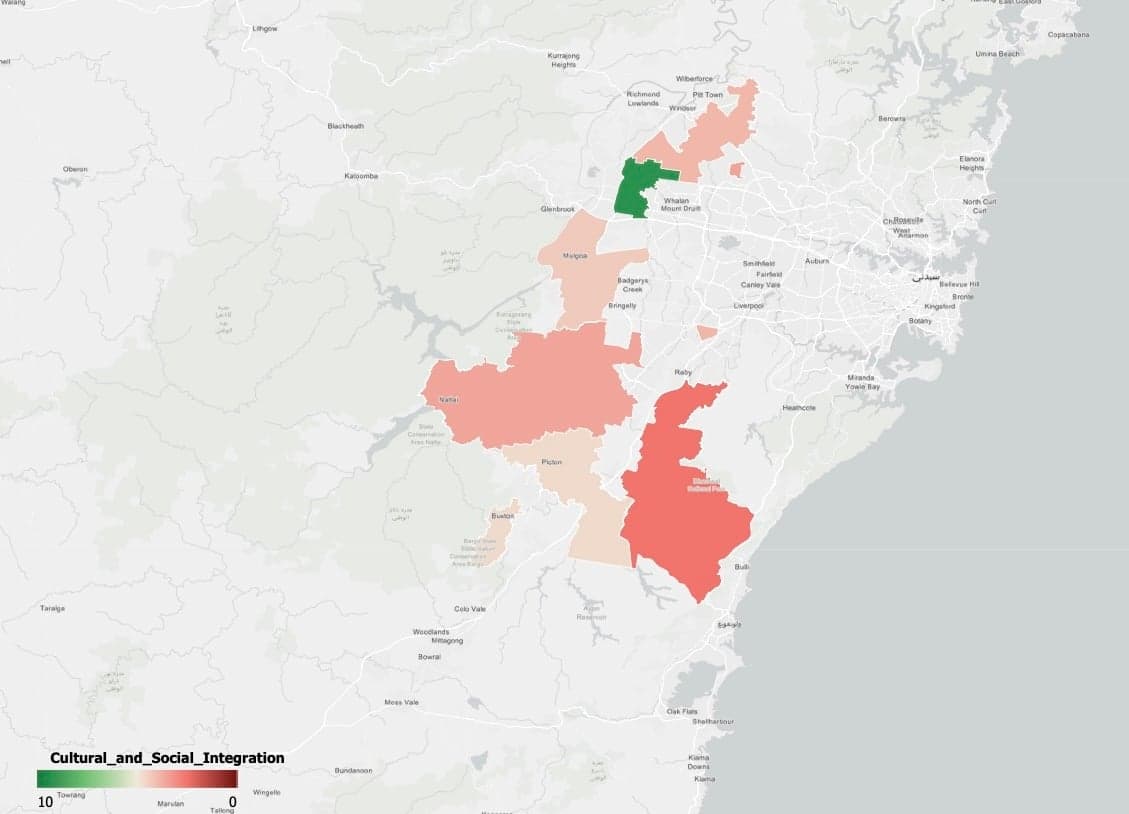
Social and Cultural Integration satisfaction, Sydney.
Sentiment analysis, which allows for “remote community consultation,” allows us to better understand the city. Here, we look at Sydney and its social and cultural integration.
Challenges and Considerations
Despite its benefits, integrating AI in urban planning comes with challenges. Data privacy and security are paramount concerns, as the use of personal data from social media and other sources must comply with privacy regulations.
Additionally, transparency in how AI algorithms make decisions is needed to ensure accountability and public trust. Urban planners must also acquire new data science and AI technology skills to harness these tools’ potential fully, or use tools like SilaCities to understand their environments better.
The Future of Urban Planning Intelligence
In conclusion, AI-driven urban intelligence platforms are revolutionizing urban planning by providing real-time, actionable insights that enhance cities’ efficiency, sustainability, and responsiveness. As metropolitan areas continue to grow and face new challenges, adopting AI-powered intelligence platforms in urban planning will be crucial in creating cities that are not only well-informed but also resilient and adaptive to the needs of their inhabitants. Tools like SilaCities’ urban intelligence platform represent the future of evidence-based city planning.
This technological evolution is not just a trend but a necessary step towards sustainable urban development, ensuring our cities thrive in an increasingly complex and dynamic world.
Transform Your City with AI-Powered Planning
Discover how SilaCities is helping cities worldwide implement AI-driven planning solutions that create better outcomes for residents and communities.